Podium vs Birdeye: an honest 2026 comparison (and a simpler alternative)
A fair, up-to-date comparison of Podium and Birdeye on price, contracts, and features, plus where ReviewGrowth fits if you mainly want more genuine Google reviews.
In short
Podium and Birdeye are both powerful, sales-led platforms that fold review collection into a much bigger suite. Podium leans into AI lead conversion, texting, and payments; Birdeye into multi-location reputation, listings, and surveys. Both are priced per location, sold by quote, and usually sit on annual contracts, so they start in the hundreds of dollars a month. If your real goal is more genuine Google reviews without the bloat or the lock-in, a focused tool like ReviewGrowth starts at $39 per location, month to month, and is compliant by default.
If you are comparing Podium and Birdeye, you are almost certainly a busy local business or a multi-location brand weighing two of the biggest names in the category. Both can do a great deal. The honest question is whether you need everything they do, because you will pay for all of it. Here is how they stack up in 2026, with no spin, and where a smaller, cheaper tool might be the better call.
Podium vs Birdeye at a glance
Here is the side-by-side. Competitor prices are the figures widely reported by third parties as of June 2026, since neither Podium nor Birdeye lists pricing publicly. ReviewGrowth is shown for context, with its real, published price.
| Podium | Birdeye | ReviewGrowth | |
|---|---|---|---|
| Best known for | AI lead conversion + texting | All-in-one reputation + experience | Google reviews, done simply |
| Starting price | From ~$399/mo | From ~$299/mo | From $39/mo |
| Pricing published? | No (sales call) | No (quote only) | Yes, on the pricing page |
| Billing | Per location | Per location | Per location |
| Contract | Annual (reported) | 12-month | Month to month |
| Free to start | No | No | Yes, no card |
| Best fit | Sales-driven local businesses | Multi-location + enterprise | Local businesses + agencies |
| Compliant by default | Opposes gating | Opposes gating | Yes, no gating switch |
What Podium does best
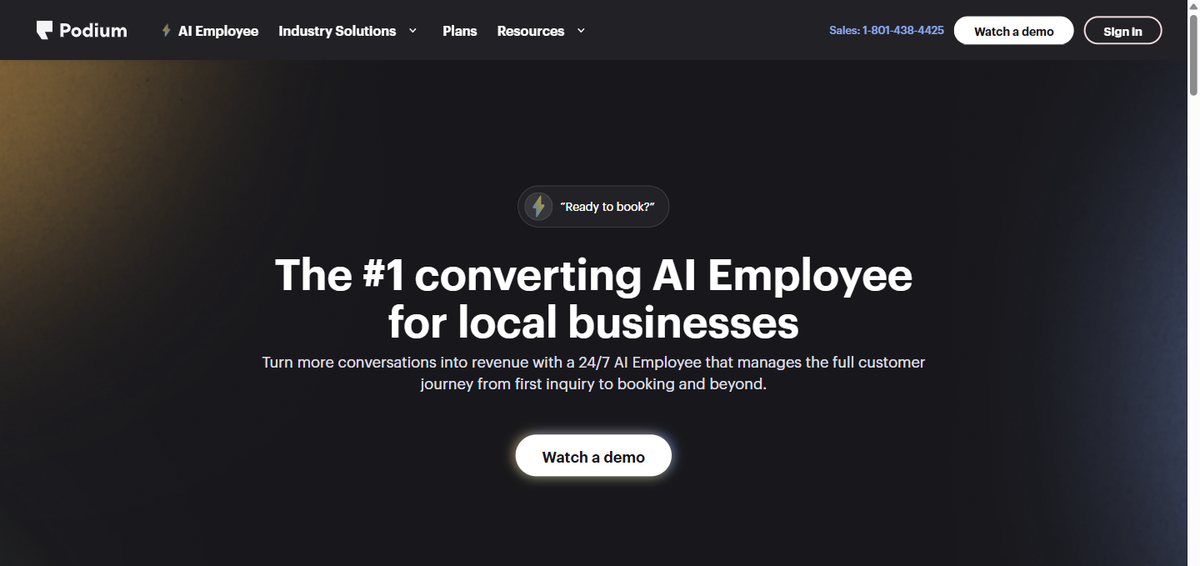
Podium started in reviews but is now centered on an AI agent that answers, qualifies, and books leads the moment they come in, over text, day or night. If converting more inbound leads is your bottleneck, that is a real strength, and the review requests ride along on the same SMS rails that make texting so effective.
Podium
Strengths
- SMS review requests convert well, because texts get opened and answered.
- A unified inbox pulls SMS, web chat, Google, and Facebook messages into one place.
- An AI assistant responds to and books leads around the clock.
- Built-in payments let you collect a payment and a review in one flow.
- Mature and well funded, with a strong G2 rating (around 4.6 from thousands of reviews).
Watch-outs
- Reported to start around $399/mo per location, among the priciest in the category (Podium does not publish pricing; the entry tier is widely reported around $399/mo per location (third-party estimates, June 2026).).
- No public pricing, so you have to sit through a sales call to learn what you would pay.
- Typically an annual contract with auto-renewal, a frequent theme in public complaints.
- Review collection is bundled into a much larger suite you pay for whether you use it or not.
- Lower tiers cap bulk message credits, which can surprise you after signup.
What Birdeye does best
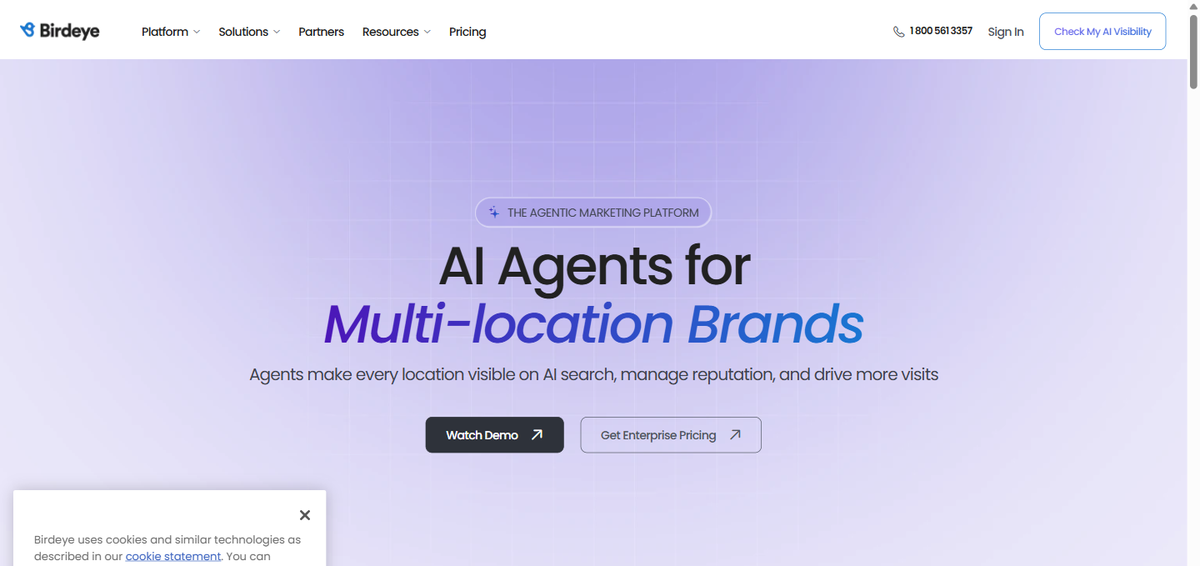
Birdeye is the broader of the two. It collects and monitors reviews across 150+ sites, manages your business listings, runs surveys, and handles social and messaging, all from one dashboard. For a brand with many locations and a marketing team to drive it, that breadth genuinely reduces tool sprawl.
Birdeye
Strengths
- Truly all-in-one: reviews, listings, social, messaging, and surveys together.
- Aggregates and monitors reviews across 150+ sites, useful for multi-location tracking.
- Strong central management and reporting across many locations.
- AI writes review responses and social content, which saves real time.
- Very high G2 rating (around 4.7) and recognized as an enterprise reputation leader.
Watch-outs
- Quote-only pricing, reported from around $299/mo per location (Birdeye does not publish pricing; it is quote-based and reported from around $299/mo per location (third-party estimates, June 2026).).
- Standard 12-month contract, and cancellation friction is a common public complaint.
- The breadth can feel complex or overbuilt if you only want reviews.
- Per-location pricing adds up quickly across a large portfolio.
- Onboarding and support quality draw mixed reviews at the lower end.
What Podium and Birdeye have in common
- Per-location, quote-based pricing. Neither publishes a price, so your real cost depends on a sales conversation.
- Annual contracts. Both usually ask for a year up front, and both have a visible cluster of public complaints about cancellation. That is not unique to them, but read the terms before you sign.
- Big, broad suites. Reviews are one part of a much larger product. You are buying a platform, not a review tool.
- Enterprise gravity. Both shine most for established or multi-location businesses with someone to run them.
- Against review gating. To their credit, both Podium and Birdeye publicly oppose review gating, the practice of steering unhappy customers away from public reviews. So do we.
A quick gut check before you commit
Add up what you would actually use. If the honest answer is mostly review requests and a tidy place to read feedback, you are about to pay enterprise prices for a fraction of an enterprise platform. That is the gap a focused tool fills.
The third option: a focused, compliant review tool
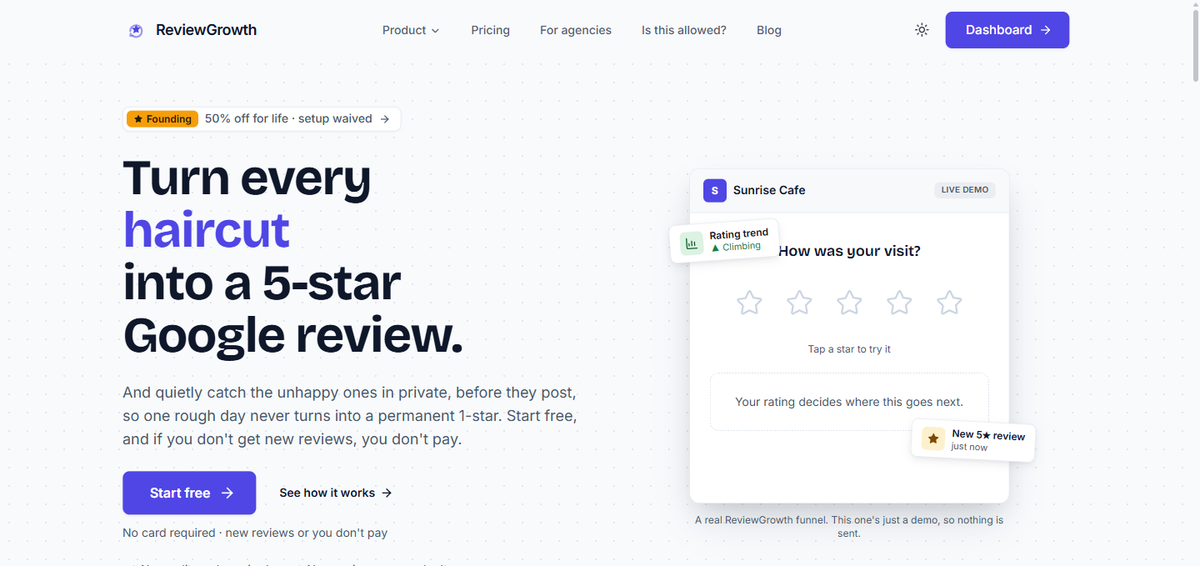
ReviewGrowth does one job and does it well: it turns your happy customers into genuine 5-star Google reviews, and quietly routes the unhappy ones to a private channel so you can fix the problem before it becomes a public one-star. A customer scans a QR code, opens a WiFi splash screen, or taps a link, picks a rating in about ten seconds, and the routing takes over. Everyone is always free to post publicly, which is what keeps it inside Google's rules.
The difference you feel day to day is the absence of friction. Pricing is published and starts at $39 per location. There is no annual contract and no sales call, you can start free with no card, and you are usually live in about ten minutes. If you do not collect new reviews in your first month, that month is free. For most local businesses and the agencies that serve them, that is the whole job, at a fraction of Podium or Birdeye.
How to choose between Podium, Birdeye, and ReviewGrowth
- 1
Name your real goal
If it is converting inbound leads over text, look hard at Podium. If it is managing reputation across many locations, look at Birdeye. If it is simply getting more Google reviews, keep reading.
- 2
Decide how much platform you will actually use
Be honest about the listings, surveys, social, and AI lead tools. If you would not switch them on, you should not pay for them.
- 3
Check the budget and the contract
Both incumbents are hundreds a month per location on an annual term. ReviewGrowth is a flat, published per-location price with no lock-in, so the math is easy to predict.
- 4
Try the focused tool first
Because ReviewGrowth starts free with no card, you can have a live, compliant review funnel running today and see the reviews come in before you ever consider a heavier platform.
Frequently asked questions
- Is Podium or Birdeye better?
- Neither is strictly better; they fit different jobs. Podium is the stronger pick for AI-driven lead conversion and texting, while Birdeye is built for managing reputation across many locations. If your main goal is collecting more Google reviews, both are more platform than you need, and a focused tool like ReviewGrowth covers that job for far less.
- How much do Podium and Birdeye cost?
- Neither publishes pricing. Third-party reports put Podium's entry tier around $399 per month per location and Birdeye's around $299 per month per location, both on annual contracts, as of June 2026. You confirm the real number on a sales call. ReviewGrowth, by contrast, publishes its pricing and starts at $39 per location, month to month.
- Do Podium and Birdeye require an annual contract?
- Both are typically sold on annual contracts that auto-renew, and cancellation terms are a common theme in public complaints, so it is worth reading the agreement carefully before signing. ReviewGrowth is month to month with no contract.
- What is a cheaper alternative to Podium and Birdeye?
- If you mainly want more Google reviews, ReviewGrowth is a focused, compliant alternative that starts at $39 per location with no contract and no setup fee. Other lower-cost options include NiceJob and GatherUp, though they fit different needs. See our Podium alternatives and Birdeye alternatives pages for the full rundown.
- Do these tools follow Google's review rules?
- Podium and Birdeye both publicly state that they oppose review gating, which is the practice of steering unhappy customers away from leaving public reviews. ReviewGrowth is compliant by default too: everyone who uses your funnel is always free to post a public review, with no gating switch to flip.
Comparison based on publicly available information as of Jun 18, 2026; competitor pricing is hedged because most rivals do not publish it. Product names, logos, and screenshots are the property of their respective owners and are shown for identification and comparison. We keep these pages current, so if something is out of date, please tell us.